Embedded Systems Engineering
Embedded Systems Engineering That Ships
32bitmicro LLC delivers secure, production-grade embedded firmware and Linux platforms — from architecture through production release. We ship complete embedded platforms so your team can focus on product differentiation.
32bitmicro
Core Capabilities
Production engineering across the full embedded stack: boot, firmware, Linux, security, diagnostics, and release support.
Embedded Linux
Kernel, device tree, drivers, filesystems, and production BSP integration.
Firmware & RTOS
C/C++ firmware, Zephyr RTOS, bare-metal systems, peripherals, and real-time control.
Secure Boot
Root of trust, signing, rollback protection, measured boot, and field update integrity.
Board Bring-Up
Bootloader, clocks, pins, buses, storage, power, debug, and early hardware validation.
Diagnostics
Logs, telemetry, crash analysis, watchdog recovery, and production observability.
Release Support
Build automation, validation, documentation, handoff, and long-term maintenance.
32bitmicro
Featured Open Source Story
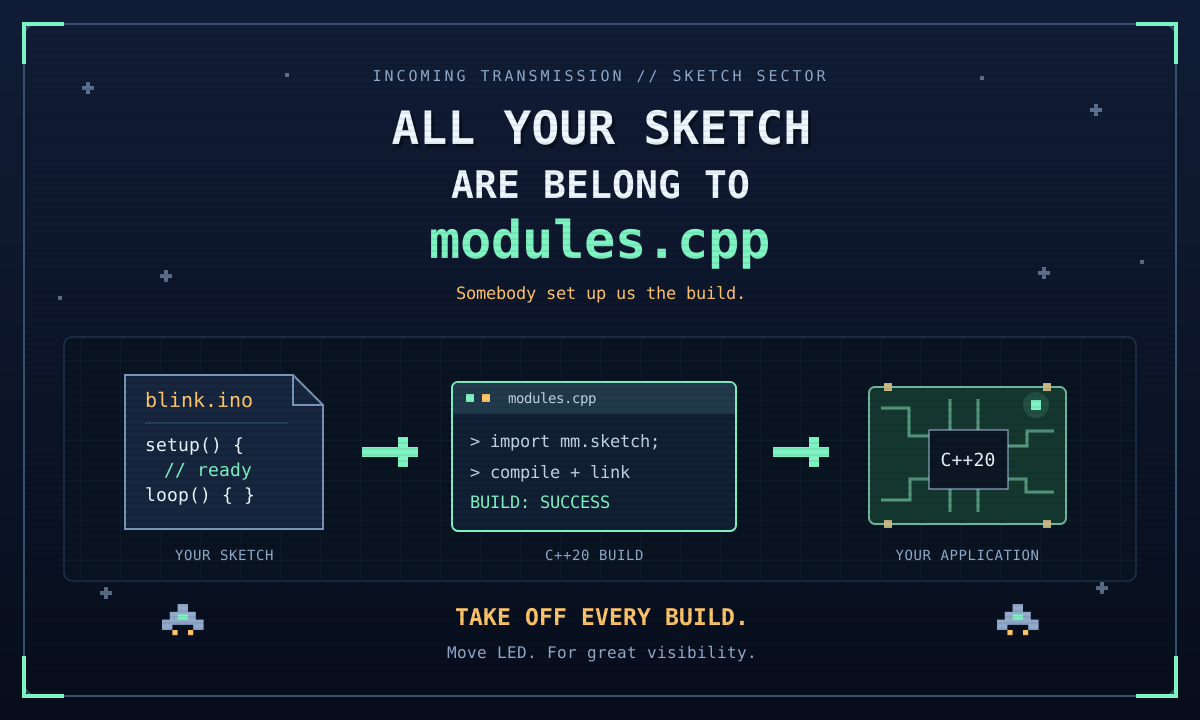
Somebody set up us the build: Arduino-style sketches march straight into the C++20 module world.
Featured Article
All Your Sketch Are Belong to modules.cpp
Your humble .ino file with setup() and loop() becomes a C++20 application importing mm.sketch.
#include "Sketch.h"
import mm.sketch;
Generate. Compile. Check. Take off every build.
Read the ArticleView the ProjectPreviously: Compiler Is All You Need
32bitmicro
Project Outcomes
Representative work centers on secure boot, BSP and kernel enablement, RTOS firmware, board bring-up, diagnostics, OTA updates, and production handoff.

Root of trust and signed releases
Bootloader, kernel, drivers, board support
Diagnostics, telemetry, update paths
32bitmicro
How Engagements Run
A disciplined lifecycle moves from discovery through architecture, bring-up, validation, release, and support.
Discovery
Define goals, constraints, target hardware, risks, schedule, and success criteria.
Architecture
Choose the system shape: OS/RTOS split, boot chain, interfaces, security, and test strategy.
Prototype
Build early firmware and platform slices to retire risk on real hardware.
Bring-Up
Integrate bootloader, kernel, drivers, board support, and basic system validation.
Validation
Verify performance, reliability, security, diagnostics, and update behavior.
Release
Package signed artifacts, production tests, documentation, and handoff materials.
Support
Operate with field diagnostics, regression triage, updates, and lifecycle maintenance.